AMR needs more than surveillance
What HIV shows about acting on resistance data
Maria Giorgalli and Gabriella Sherwood
Axmed Global Health Advisory
7 minute read
Share on WhatsAppIn July 2017, WHO published a warning about resistance to some of the most widely used HIV medicines. In six of eleven countries surveyed across Africa, Asia and Latin America, more than 10% of people starting treatment already had HIV resistant to non-nucleoside reverse transcriptase inhibitors (NNRTIs), a major first-line drug class.[1] WHO urged those countries to consider a regimen without an NNRTI.[1]
Within two years, WHO recommended a new first-line treatment built on dolutegravir for everyone.[2] By 2023, about 19 million people in resource-constrained settings were taking it.[3]
Things moved quickly because much of what was needed was already in place when the warning came. The new regimen was also easier to take and had fewer side effects, so the surveys weren’t the only reason to switch.[2] That readiness is the lesson for antimicrobial resistance (AMR) this World AMR Awareness Week:[4] a warning only helps patients if someone is ready to act on it.
A warning is only the start
Drug-resistant bacterial infections were linked to an estimated 4.95 million deaths in 2019, and world leaders have committed to cutting that by 10% by 2030.[5] This year’s awareness week calls for action to prevent resistance now.[4] Yet a resistance report does not, on its own, change the medicine a patient receives.
Someone has to read the signal. Someone has to decide what should change. Someone has to supply the new treatment, someone has to pay for it, and someone has to check that it reached the patient.
HIV had many of these arrangements in place, although countries still moved at different speeds. For bacterial infections, connecting them is often much harder.
What HIV had in place
Someone read the signal. The WHO surveys used one method and a common 10% threshold for NNRTI resistance, so countries could compare their findings and see when their guidelines needed reviewing.[1]
Someone decided. WHO updated global guidance, and countries then updated their own, at different speeds. When an early safety signal from Botswana’s Tsepamo study led some countries to pause the switch in 2018, the evidence was reviewed as it came in, estimates of the risk fell, and in 2019 WHO recommended the new regimen for everyone.[2, 6]
Someone supplied it, at a price buyers could plan around. In September 2017, the governments of Kenya and South Africa announced a price agreement with UNAIDS, the Global Fund, PEPFAR, the Gates Foundation, CHAI, Unitaid and two generic manufacturers. Eligible public buyers could get TLD, a first-line combination of tenofovir, lamivudine and dolutegravir, for a projected average of around US$75 per person per year.[7] Botswana had already switched in 2016, the first African country to do so.[6]
Someone paid, through a defined programme with domestic and international funding.
Someone checked what happened next. WHO’s 2024 report found viral suppression above 90% among people receiving dolutegravir-based treatment. Among those whose virus was not suppressed, 3.9–8.6% had HIV resistant to dolutegravir across four surveys.[8] Missed doses, treatment interruptions and other factors can also lead to unsuppressed viral loads, so it’s important to understand the cause before deciding whether treatment needs to change.
Even with these arrangements in place, change took time. By 2021, only 8 of 20 high-burden African countries had adopted WHO’s 2019 recommendation.[9] The links also have to be kept up once they are built. After the 2025 funding cuts, Malawi had to temporarily prioritise targeted rather than routine viral-load testing, and in Blantyre testing volumes were still 25% below 2024 levels at the end of 2025.[10, 11]
Table 1 compares the five steps across HIV, drug-resistant TB, malaria, bacterial sepsis and diarrhoeal infections. HIV, TB and malaria have programmes that connect evidence, guidance and supply, even if countries move at different speeds. For sepsis and diarrhoeal infections, those connections are weaker from the start.
The questions to ask are how long it takes for evidence to change treatment, and whether the change reaches patients.
| Step | HIV | Drug-resistant TB | Malaria | Bacterial sepsis | Diarrhoeal infections |
|---|---|---|---|---|---|
| 1Read the signal | Established. Standard WHO surveys informed the switch; dolutegravir resistance is now tracked | Established. Rapid tests and yearly reporting guide treatment; not everyone gets tested | Established. Efficacy studies and agreed criteria guide policy; surveillance adds early warning | Fragmented. Few laboratories can culture blood, and results rarely reach sepsis treatment decisions | Partial. Surveillance and research detect resistance in enteric pathogens, but coverage varies |
| 2Decide what changes | Established. WHO and national programmes led the switch, revising guidance as safety evidence evolved | Established. WHO updates guidance often, including six-month all-oral regimens; national adoption uneven | Established. WHO and national programmes set policy; Kenya is diversifying first-line treatment | Partial. Treatment starts before the cause is known; newborn trials are testing better options | Partial. Guidance exists, but antibiotics are often given when not needed; resistance varies by setting |
| 3Supply the treatment | Established. Generic licensing, coordinated purchasing and price agreements enabled large-scale access to the new regimen | Established. The Global Drug Facility links procurement and market shaping; the six-month regimen’s price fell from US$588 in 2022 to US$284 in 2025 | Partial. ACT procurement systems are established, but availability varies by country, and newer combinations can face price and supply barriers | Fragmented. Antibiotic access depends on dispersed purchasing and supply systems; SECURE is developing coordinated approaches | Partial. ORS and zinc programmes, such as Nigeria’s, show delivery capacity; many antibiotics are bought privately |
| 4Pay for the response | Partial. A defined programme with domestic and international funding; the 2025 funding cuts put it under strain | Partial. A defined programme, but funding remains far below agreed targets | Partial. Dedicated funding exists but is insufficient and donor-dependent | Fragmented. Funding is spread across clinical services, medicine budgets and AMR plans | Fragmented. Vaccines and some treatment programmes are funded, but not linked to resistance decisions |
| 5Check what happened | Partial. Viral-load testing, resistance surveys and safety monitoring are established, but coverage and continuity vary | Partial. Routine reporting tracks treatment outcomes and uptake, but resistance monitoring and follow-up remain uneven | Partial. Periodic efficacy studies; links to routine outcomes need protecting | Partial. Studies and surveillance exist, but prescribing, resistance and outcomes are rarely linked | Partial. Selected outcomes are measured; resistance, antibiotic use and response are rarely linked |
| Coordination across all five steps | National programmes, working with WHO and international funders | National TB programmes, with WHO and the Global Drug Facility | National malaria programmes, with WHO and international funders | No single owner; responsibility spread across hospitals, laboratories and AMR plans | Coordinated in some places, but no single owner for antibiotic decisions |
How to read the table:
- Established - Defined mechanisms are in place and widely used, although implementation varies.
- Partial - Mechanisms exist, but coverage, capacity or implementation remains uneven.
- Fragmented - Relevant activities exist, but responsibilities and processes are not consistently connected.
Note: This is an illustrative comparison of how the five steps are organised, not a validated assessment of programme performance. Coverage and implementation vary across countries and health facilities. Sepsis and diarrhoeal infections involve multiple pathogens and are not directly comparable to single-pathogen programmes. The coordination row describes how the five steps are connected and is not included in the colour-coded assessment.
Why bacterial infections are harder
Bacterial AMR is many problems at once. WHO’s 2025 surveillance report estimated resistance in around 1 in 5 laboratory-confirmed bacterial infections assessed in the African Region.[12] Each pathogen needs its own tests and treatments, resistance varies from place to place, and there is no single threshold that tells a country when to change treatment. Local evidence is often thin: across 14 African countries, about 1% of 53,770 listed laboratories were formally assigned to bacteriology testing.[13]
Treatment is harder to change, too. Patients with serious infections often need antibiotics before laboratory results are available, and many people obtain antibiotics without seeing a prescriber. Across 23 studies in sub-Saharan Africa, around 69% of requests for antibiotics without a prescription resulted in a sale.[14]
So there will rarely be one treatment switch that countries can make at scale. The response has to fit the infection, the local evidence and the places where patients actually receive care, alongside prevention through vaccination, infection control, clean water and sanitation.
Where treatment guidance meets medicine supply
Supply is one practical place to start, because it is concrete, measurable and now has a new African institution behind it. When a recommended antibiotic is out of stock, clinicians may have to use a different one, sometimes with a broader spectrum, which adds to resistance pressure. Sometimes patients go without effective treatment.
One place to see whether treatment guidance is translating into practice is in what facilities are buying. In 2025, Axmed analysed purchases of 14 essential maternal and child health medicines across 140 facilities in five Kenyan counties. Oral antibiotics such as amoxicillin were purchased much more widely than injectable antibiotics used to treat serious newborn infections, including gentamicin and benzylpenicillin.[15] Purchasing records alone can’t tell us whether medicines were unavailable or whether facilities needed them. But they can help identify where to investigate further: which facilities should have these treatments, whether they are being ordered, and what happens when they aren’t.
Africa’s new pooled buyer could help with supply gaps like this at national level. The African Pooled Procurement Mechanism (APPM), run by Africa CDC, completed its first tender in 2026, for maternal and newborn medicines across ten countries, at prices 30–90% below participating countries’ benchmarks.[16]
APPM’s initial priority list already includes amoxicillin, and its November 2026 tender covers a broader range of essential health products. Pooled procurement could help address further gaps in antibiotic access, from Access medicines with unreliable supply to Watch and Reserve antibiotics affected by high costs and registration barriers.[17, 18] Its order and delivery records could also help track antibiotic consumption, a use WHO already recognises,[19] and show whether purchasing keeps up with changes in treatment guidance. Alongside WHO and GARDP’s SECURE initiative[20] and WHO’s guidance on introducing new antibiotics,[21] APPM could help turn agreed treatment needs into more reliable supply.
Technology-enabled procurement has a part to play here. On Axmed’s technology platform, procurers pool demand, compare offers from verified suppliers and see prices and delivery, and what we learn from every order shows where supply is falling short.
Agree on the response before the next warning
For priority infections, countries and their partners could agree in advance what resistance findings should trigger a review, who decides whether treatment needs to change, how a change will be funded and supplied, and how they will check that it reached patients. Not every warning will need a new antibiotic. Sometimes the answer will be better diagnostics, closer monitoring or changes in prescribing. Either way, the evidence should not get stuck between committees, budgets and supply systems.
Africa CDC already works on both pooled procurement and mapping laboratory capacity.[13] If that work were joined up, a change in treatment could come with its budget, forecast and supply already planned, so the next signal could reach patients sooner.
The next resistance signal will tell us something about the pathogen. How effectively we respond will tell us something about our health systems.
About Axmed Global Health Advisory
Growth markets are ready to buy the medicines and health products their people need. Axmed is building a new model for access, and Global Health Advisory (GHA) is where it starts. We work with pharmaceutical companies, global health organisations and funders on how medicines and health products enter these markets: which products to prioritise, how to finance and price them, and how to launch them. Because GHA works alongside Axmed’s technology platform and the intelligence from every order placed on it, our advice draws on what is happening in these markets in real time.
References
- World Health Organization. WHO urges action against HIV drug resistance threat. WHO; 20 July 2017.
- World Health Organization. WHO recommends dolutegravir as preferred HIV treatment option in all populations. WHO; 22 July 2019.
- The Global Fund. Global Fund agreements substantially reduce the price of first-line HIV treatment to below US$45 a year. The Global Fund; 30 August 2023.
- World Health Organization. World AMR Awareness Week 2026: One Health, one action – Prevent AMR now. WHO; 2026.
- World Health Organization, FAO, UNEP and WOAH. World leaders commit to decisive action on antimicrobial resistance. Joint news release; 26 September 2024.
- Zash R, et al. Neural-tube defects and antiretroviral treatment regimens in Botswana. N Engl J Med. 2019;381(9):827–840. doi:10.1056/NEJMoa1905230
- UNAIDS. Price reduction of the dolutegravir-based antiretroviral therapy regimen: Frequently asked questions. UNAIDS; 2017.
- World Health Organization. HIV drug resistance – brief report 2024. WHO; 2024.
- aidsmap. Most countries with the greatest burden of HIV still don’t recommend dolutegravir for all. aidsmap; 18 July 2021.
- UNAIDS. Impact of US funding cuts on HIV programmes in Malawi. UNAIDS; 27 March 2025.
- Kachingwe E, et al. Effects of global HIV funding shifts on facility staffing, prevention, testing, and treatment services in Malawi. SHIFT Policy Brief; 30 June 2026.
- World Health Organization. Global antibiotic resistance surveillance report 2025. Geneva: WHO; 2025.
- Ondoa P, et al. Bacteriology testing and antimicrobial resistance detection capacity of national tiered laboratory networks in sub-Saharan Africa: an analysis from 14 countries. Lancet Microbe. 2025;6(1):100976.
- Belachew SA, Hall L, Selvey LA. Non-prescription dispensing of antibiotic agents among community drug retail outlets in Sub-Saharan African countries: a systematic review and meta-analysis. Antimicrob Resist Infect Control. 2021;10:13.
- Axmed. Impact Report 2025: Building the Infrastructure for Access. Axmed; 2026. Available at: https://www.axmed.com/impact
- Africa Centres for Disease Control and Prevention. Africa CDC announces results of African Pooled Procurement Mechanism (APPM) tender for essential RMNCH medicines. Africa CDC; 12 May 2026. Available at: https://africacdc.org/news-item/africa-cdc-announces-results-of-african-pooled-procurement-mechanism-appm-tender-for-essential-rmnch-medicines/
- World Health Organization. The selection and use of essential medicines, 2025: WHO AWaRe (Access, Watch, Reserve) classification of antibiotics for evaluation and monitoring of use. Geneva: WHO; 2025. doi:10.2471/B09489.
- World Health Organization Regional Office for Africa. Understanding antibiotic access in the WHO African Region: results of a multicountry survey and stakeholder roundtables. WHO; 2026.
- World Health Organization. GLASS methodology for surveillance of national antimicrobial consumption. Geneva: WHO; 2020.
- Global Antibiotic Research & Development Partnership. SECURE: improving access to essential antibiotics. Geneva: GARDP.
- World Health Organization. Country preparedness for the introduction and appropriate use of antibiotics: operational guidance. WHO; 17 September 2025.
Insights
Keep reading

Restless: what AHMTEC told me about AI and access to medicines
Reflections after AHMTEC on will, sovereignty and the chance to leapfrog with AI
Sofia Radley-Searle
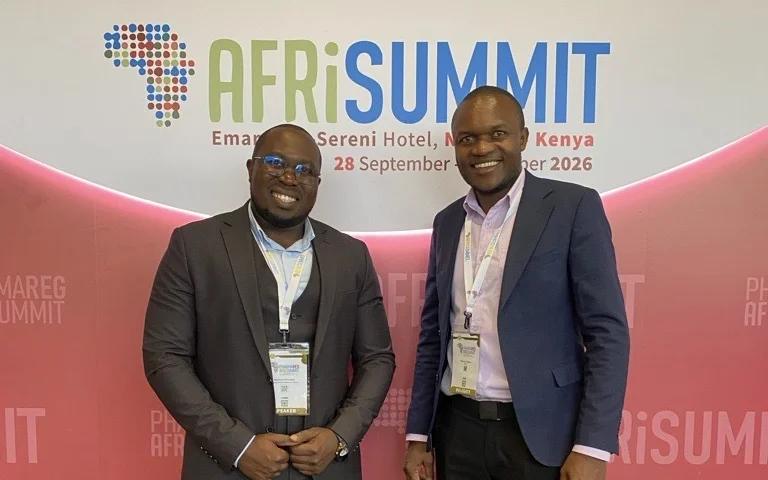
Is Regulatory Approval The Happy Ever After? What Comes After the 'Regulatory Finish Line'
Reflections from PharmaReg AfriSummit 2026 on connecting regulatory approval, procurement, financing and logistics to real patient access.
- PDF
Why the new normal in global health requires a new access model
Development financing has changed permanently. Axmed Global Health Advisory's Access360 framework builds access strategy into product development.
Axmed Global Health Advisory