How we are making pharmaceutical quality scalable and accessible with AI
How Axmed turns day-long manual prequalification and GMP and GDP audit work into real-time quality intelligence with AI. By Sofia Radley-Searle, COO.

Sofia Radley-Searle
Co-Founder and COO
5 minute read
At Axmed, we're using AI-powered tools to transform prequalification or GMP/GDP audit, from day-long manual processes into real-time quality intelligence.
Pharmaceutical quality systems, including audits, are essential in our space. They're also slow, manual, and hard to scale. That's a major challenge when you're building a marketplace that democratizes access to quality medicines, for billions.
We knew that being passive actors in the quality space would not be enough, and so we wanted to find a way to enforce quality standards more efficiently, without compromising on rigor. We couldn’t find one, so we built one.
The problem with traditional quality management systems
At Axmed, quality isn't negotiable. Every supplier on our B2B marketplace goes through comprehensive prequalification aligned with WHO MQAS, PIC/S GMP & GDP principles, as well as ISO 9001 standards. That means onboarding due diligence, regulatory verification, GMP/GDP risk-based audits, random sampling for product testing, and ongoing monitoring for continuous feedback loops and maintained accountability.
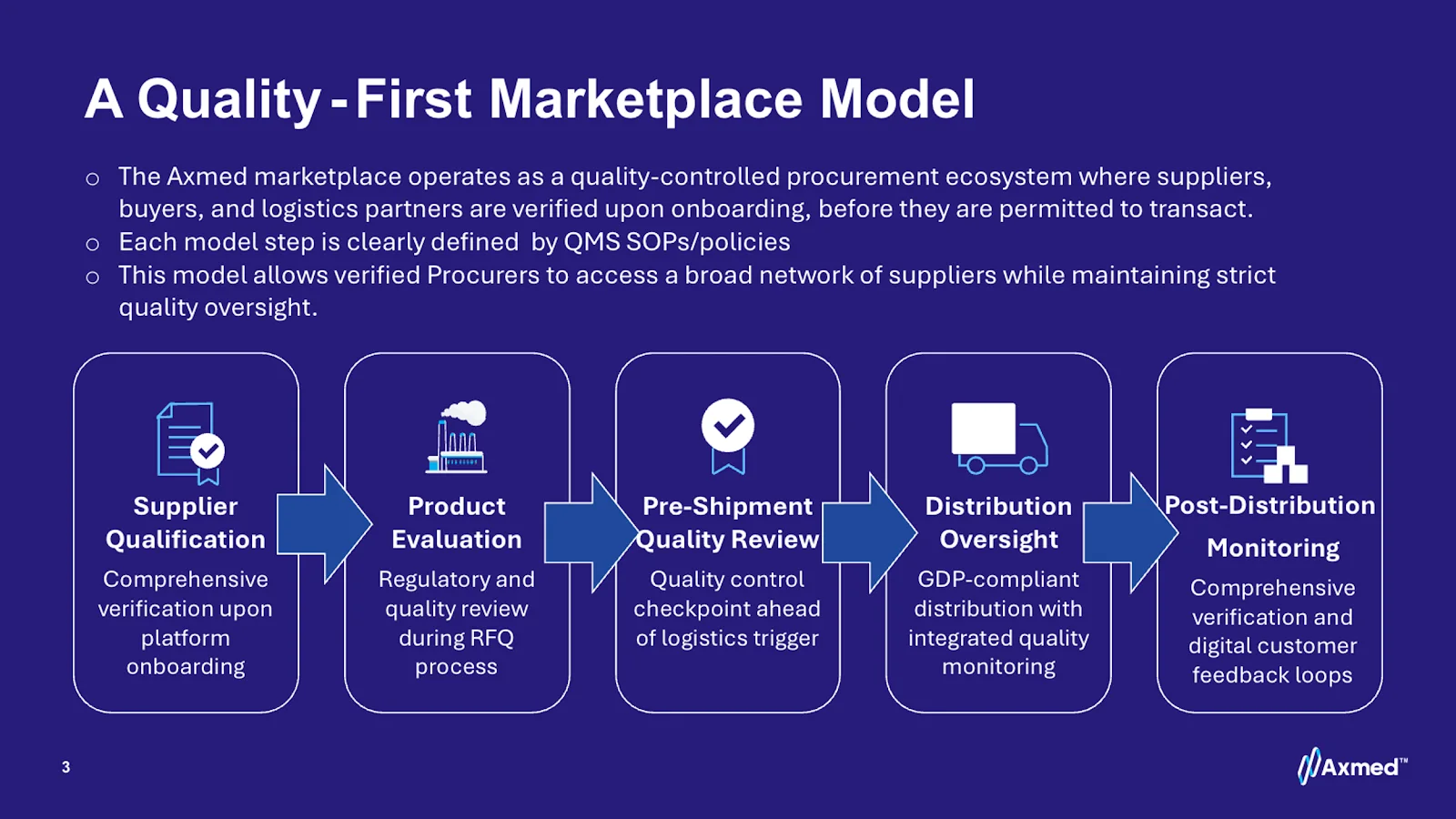
All these steps are critical, but can get things to move very slowly, becoming a key challenge to broadening access to medicines in a timely manner.
Take in-person audits, for example:
Auditors spend days on-site at manufacturing and distribution facilities, taking notes, which are often still hand-written, while simultaneously observing operations, interviewing staff, and reviewing documentation. After the audit, they spend days consolidating handwritten notes, cross-referencing checklists, identifying findings, categorizing severity, and drafting comprehensive reports with Corrective and Preventive Actions (CAPA).
It's time-consuming. It's inconsistent across different auditors. And it doesn't scale at the pace that demand for quality medicines does.
For a startup trying to expand access to quality medicines across Sub-Saharan Africa and beyond, this was a bottleneck we couldn't accept. Patients can’t afford the time to wait.
How we got here
We didn't start with a grand plan to transform pharma audits. We started with a specific pain point that every quality team recognizes.
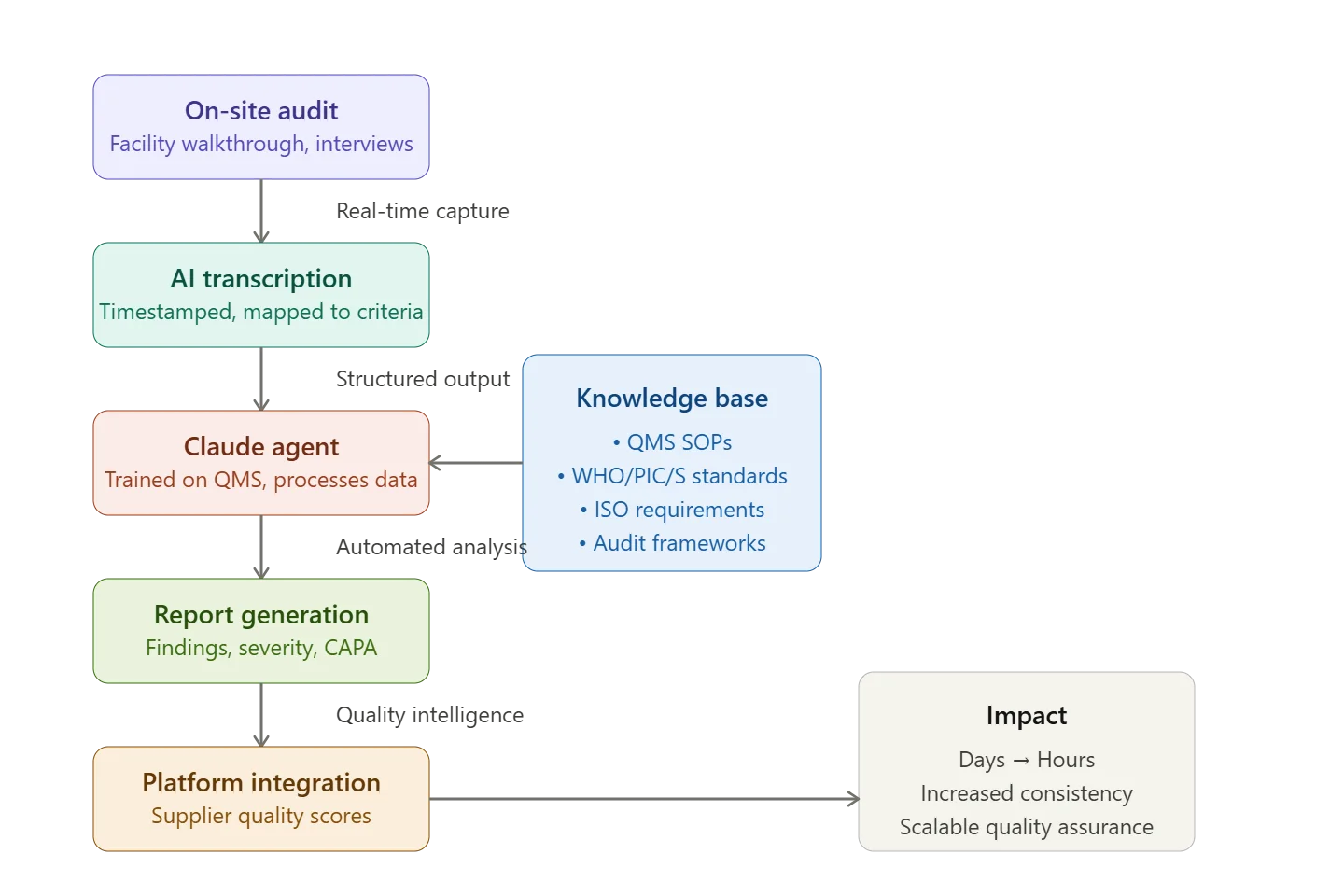
First, we introduced AI-powered transcription during on-site audits. Auditors could focus on observation, human interaction, analysis and judgment while the system captured everything: facility walkthroughs, conversations with quality managers, documentation reviews, shared evidence, responses to checklist questions.
You might be wondering: Is this just a fancy expensive recorder? The transcriber is contextual: timestamps, maps discussions to audit criteria, captures visual evidence and flags potential non-conformances for later analysis. This was already a breakthrough for our team.
But we still had the report-writing bottleneck.
That's when we built the AI Quality agent. We trained it on our entire Quality Management System: our SOPs, audit frameworks, checklists, WHO/PIC/S/ISO standards, regulatory requirements across jurisdictions, you name it. We gave it the full audit transcript and asked it to do what our team was spending days doing manually: process the transcript, cross-reference against checklist criteria, inspect all evidence shared by auditee, identify gaps and non-conformances against standards or against their own SOPs, categorize findings by severity, generate structured audit reports with required CAPA as well as all required follow ups.
It worked. What took days, and weeks, now takes minutes.
Our quality experts now focus the majority of their time reviewing and interrogating the AI agent’s output - adding the strategic intelligence and nuanced human judgement added from the visit itself. And while this was clearly more efficient, faster and scalable; the quality of reporting also improved, more consistent, more comprehensive, and little overlooked.
Why quality-first tech matters
There's a dangerous misconception in startup culture that you move fast by breaking things. In pharmaceuticals, that logic kills people.
Substandard medicines don't work. Falsified medicines harm. Quality failures in manufacturing or distribution can render life-saving treatments ineffective or dangerous.
Our approach is quality first, by design. Every piece of technology we build has to enhance quality assurance, not compromise it. AI-powered audits do exactly that:
More transparent: Complete audit transcripts create an auditable trail of every observation and conversation.
More rigorous: AI analysis ensures no checklist item is overlooked; all regulatory requirements are systematically addressed.
More consistent: Standardized processing reduces variability between auditors.
Faster corrective action: Rapid report turnaround means suppliers will address issues sooner.
Scalable: We can conduct more thorough audits across suppliers without proportionally increasing the resources required to do so.
What this enables
This isn't just about making our internal processes faster. It's about what that speed enables.
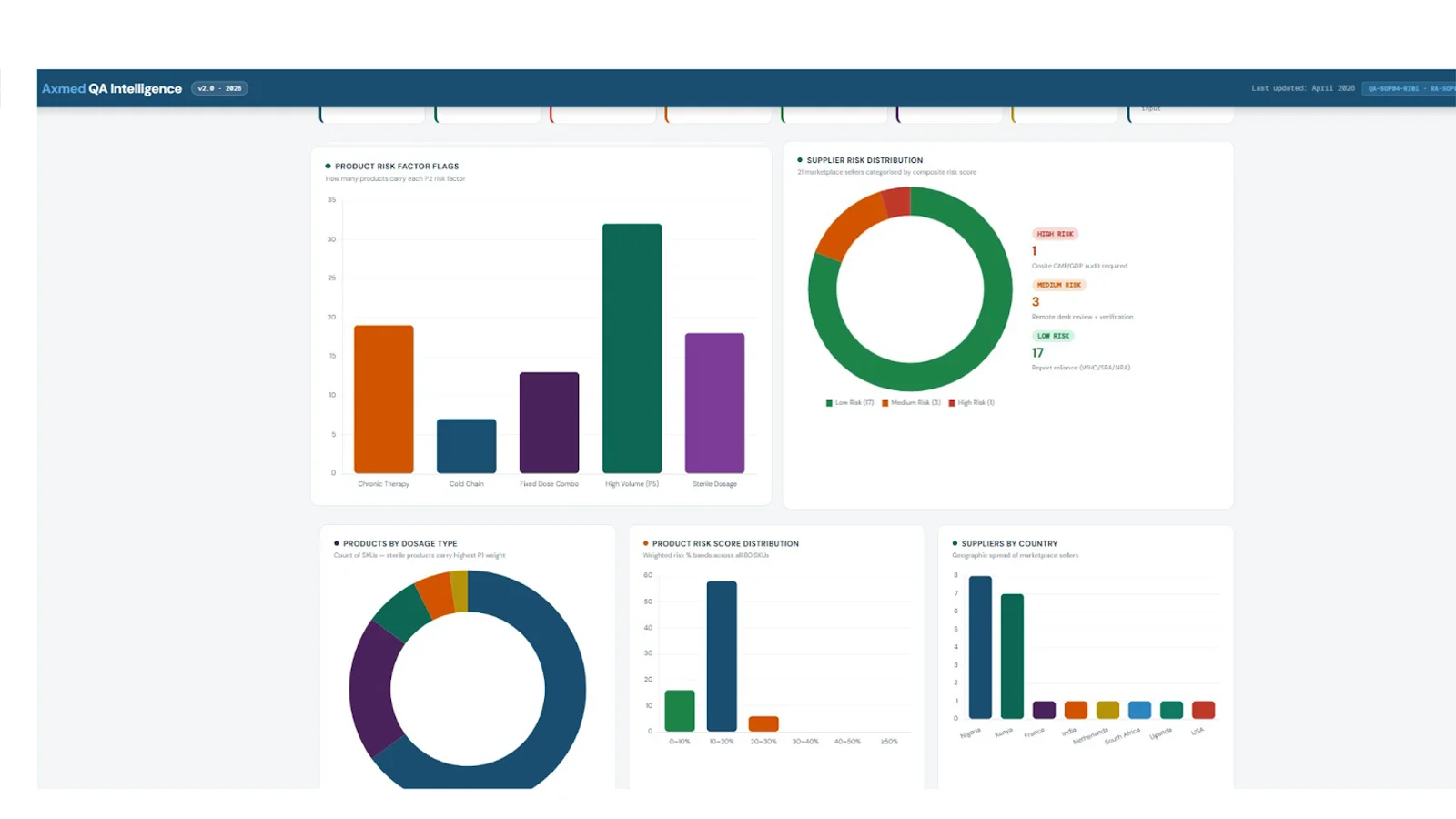
Our marketplace integrates quality intelligence directly into the platform. Healthcare procurers - hospitals, NGOs, governments and international players - can access transparent quality information on suppliers. They make sourcing decisions based on quality, not just price, and they procure from Axmed with confidence that standards are maintained routinely and consistently.
For manufacturers, the dynamic shifts. Those who invest in quality facilities and processes gain a competitive advantage. Audit scores become business differentiators. The market rewards doing the right thing.
At the platform-level, quality intelligence creates network effects that extend beyond individual audits. Patterns across audits inform risk-based monitoring. Aggregated data reveals systemic quality trends. In the future, this intelligence could enable regulators and policymakers to target interventions more effectively and precisely.
What's next
AI-powered audits are just the start. We're building:
Predictive quality analytics using historical audit data to identify risks before they manifest
Automated document verification for all our Regulatory onboarding steps
Real-time distribution monitoring for GDP compliance
Pharmacovigilance and quality complaint signal detection using natural language processing on customer feedback
Every innovation follows the same principle: technology must enhance quality, transparency, and accountability - never substitute for them.
We're proving that cutting-edge technology and uncompromising quality standards can coexist. That AI with the right guardrails and training can make rigorous compliance faster and better, not faster and sloppier. That innovation in global health can accelerate access while maintaining the standards that keep medicines safe and effective.
That's what quality-first tech looks like.
About Sofia Radley-Searle
Sofia is Co-Founder and Chief Operating Officer at Axmed. A Pharmacist by training, who also holds and MBA from Harvard Business School and has 10+ years combined experience in the pharma sector and Global Health
Insights
Keep reading
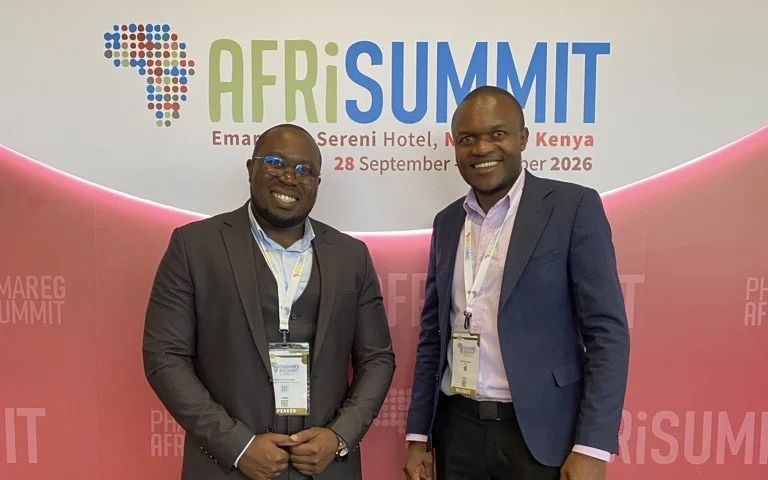
Is Regulatory Approval The Happy Ever After? What Comes After the 'Regulatory Finish Line'
Reflections from PharmaReg AfriSummit 2026 on connecting regulatory approval, procurement, financing and logistics to real patient access.
- PDF
Why the new normal in global health requires a new access model
Development financing has changed permanently. Axmed Global Health Advisory's Access360 framework builds access strategy into product development.
Axmed Global Health Advisory

The certificate was valid. The medicine was not.
Rethinking medicine quality in East Africa's supply chain: the medicine reached the patient, the label was correct, and it did not work.
Dr Onyango Michael